
WELCOME BONUS 300%
UP TO €2000 + 100
FREE SPINS
UP TO €2000 + 100
FREE SPINS
Home → Payments
Payment methods at Shokker Casino
Deposit Not Showing Up? 3 Things to Check First
A missing deposit is usually the result of one of three common causes: first, the transaction has not yet been confirmed by the blockchain or the payment provider; second, the payment was made with a method that is not supported for that account; third, the deposit was directed to a different wallet or account than the one registered at Shokker Casino. Checking these three items in order resolves most cases without contacting support. The player should verify each step before assuming the funds are lost.
For crypto deposits, Bitcoin, Ethereum, Litecoin, Ripple and Dogecoin each require a minimum deposit of 25 EUR and allow up to 12,000 EUR per transaction. Card deposits with Visa or Mastercard start at 15 EUR and go up to 6,000 EUR, while bank transfers begin at 25 EUR and reach 15,000 EUR. E-wallets such as Skrill, Neteller, ecoPayz, MuchBetter and Jeton require at least 15 EUR and cap at 10,000 EUR. If the amount sent falls below the method's minimum, the transaction may not be credited automatically.
The player should confirm that the deposit amount meets the minimum for the chosen method, that the sending account matches the casino account holder's name, and that any blockchain confirmation has completed. If the funds still do not appear, the next step is to prepare identity documents for KYC, which requires ID and proof of address before the first withdrawal. Keeping the transaction hash or receipt ready speeds up any manual review.
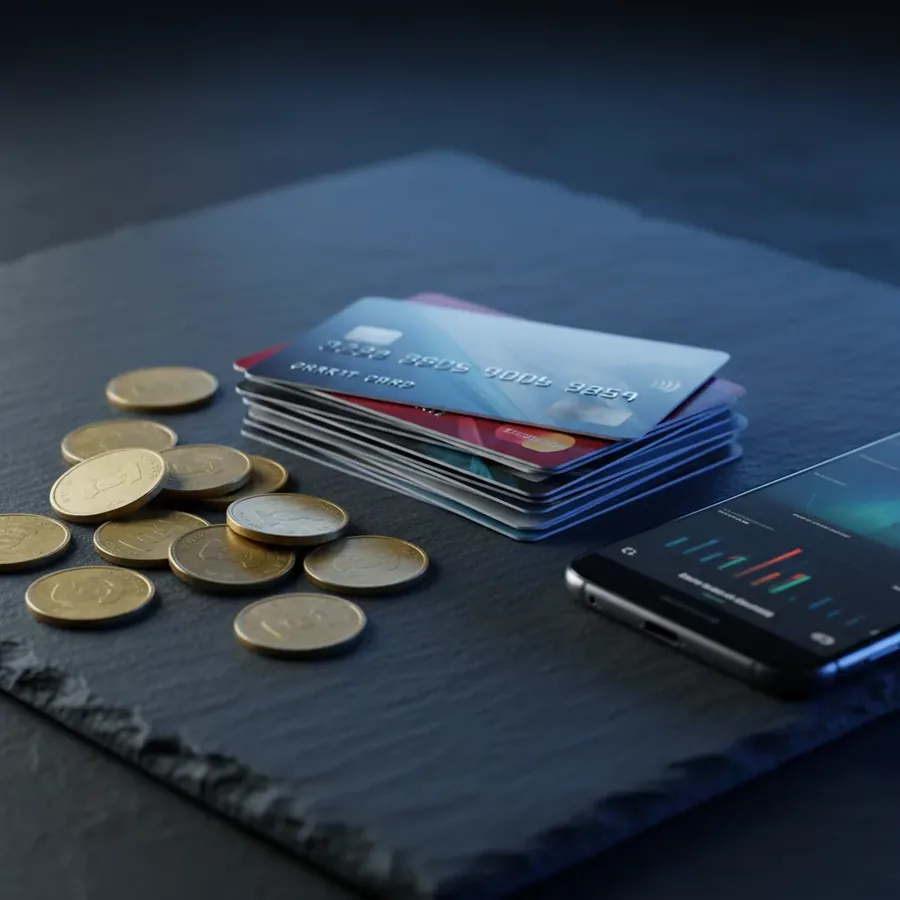
13 Payment Methods Compared
Thirteen payment methods are available for deposits, split across cards, bank transfers, e-wallets and crypto, and the minimum deposit is €15 for most of them against €25 for the rest. Visa and Mastercard both start at €15 and allow up to €6,000, which places them below the bank and e-wallet ceilings on the same list. A player comparing entry cost alone will find the card and e-wallet routes cheapest to start.
The upper limits differ far more than the lower ones. Bank Wire reaches €15,000, the highest maximum on the list, while Skrill and Neteller reach €12,000 and Bitcoin, Ethereum, Litecoin, Ripple and Dogecoin also stop at €12,000. EcoPayz, MuchBetter and Jeton sit at €10,000 each, and the two cards remain the lowest at €6,000. Matching the method to the intended deposit size avoids a rejected or split transfer.
Crypto methods all begin at €25, the same threshold as a Bank Wire, so they are not the cheapest way to open an account but they allow larger single transfers than the cards. The e-wallet group mixes both levels: Skrill and Neteller start at €15 with a €12,000 ceiling, while ecoPayz, MuchBetter and Jeton start at €15 with €10,000. A player planning a first deposit of exactly €15 is limited to the card and e-wallet options.
Start Verification Before First Withdrawal is Due
Verification, known as KYC, is the identity check a casino must complete before releasing money, and the documents required here are an ID and a proof of address. Both must be submitted before the first withdrawal is processed. Starting the upload early means the check runs while the player is still building a balance rather than after a request has been made.
The proof of address normally has to be recent and show the same name and address as the account, so a document that is outdated or registered elsewhere will be sent back. A player who deposited €15 by Visa or Mastercard has already passed a basic name check with the card issuer, but that does not replace the address document. Keeping both files ready in advance removes the wait at the payout stage.
Submitting the two documents does not itself trigger a withdrawal and no payout limit is attached to the process. The practical step is to upload the ID and the proof of address as soon as the account is opened, then confirm that both show as accepted. A player who waits until a withdrawal is due risks seeing the request paused while the same check is completed.
Withdrawal Rejected: 4 Common Reasons
A rejected withdrawal at Shokker Casino usually traces back to one of four causes: incomplete KYC, a deposit method that cannot receive the payout, a breach of bonus terms, or a request made before playthrough is finished. KYC means identity verification, and the casino requires ID and proof of address before the first withdrawal. A player who has not yet sent those two documents will see the request held rather than paid.
The first reason is missing verification documents, and the second is a mismatch between the deposit method and the payout route. Card deposits through Visa or Mastercard start at 15 EUR and reach 6,000 EUR, while bank transfers start at 25 EUR and reach 15,000 EUR. A withdrawal is normally sent back through the same channel that funded the account, so a player who deposited by card cannot redirect the payout to a bank account.
The third reason is an unfinished bonus condition. A 300% welcome bonus up to €2,000 plus 100 free spins carries playthrough rules, and cashing out before those are met cancels the bonus and the winnings tied to it; a 500 EUR deposit gives 1,500 EUR of bonus. The fourth is a payout request that exceeds the method limit. A player should verify documents, method and bonus status before submitting.
Deposit Failed? 5 Common Causes to Check
A failed deposit is usually a limit or method problem rather than a fault at the casino, so the first check is whether the amount falls inside the range for that method. Visa and Mastercard accept a deposit from €15 up to €6,000, so a card payment above that ceiling will be declined outright. Confirming the range before retrying saves a second rejection.
The second cause is an entry below the minimum, which is €15 for the card and e-wallet routes and €25 for Bank Wire and every crypto option. The third is a card or wallet that has not been enabled for online transactions by the issuer. A player who deposited €15 successfully before and now sees a failure should look at the amount and the method rather than the account itself.
The fourth cause is an incomplete verification, since an ID and a proof of address are required before the first withdrawal, and an account still under review can have deposits held. The fifth is a mismatch between the account holder name and the payment source. Checking the amount against the method range, the issuer settings and the document status covers all five points before a new attempt.
Payment methods and deposit limits
| Method | Type | Min. Deposit | Limit |
|---|---|---|---|
| Visa | card | €15 | €6,000 |
| Mastercard | card | €15 | €6,000 |
| Bank Wire | bank | €25 | €15,000 |
| Skrill | e-wallet | €15 | €12,000 |
| Neteller | e-wallet | €15 | €12,000 |
| Bitcoin | crypto | €25 | €12,000 |
| Ethereum | crypto | €25 | €12,000 |
| Litecoin | crypto | €25 | €12,000 |
| Ripple | crypto | €25 | €12,000 |
| Dogecoin | crypto | €25 | €12,000 |
| ecoPayz | e-wallet | €15 | €10,000 |
| MuchBetter | e-wallet | €15 | €10,000 |
| Jeton | e-wallet | €15 | €10,000 |
Planning Live Table Bets: Minimum Bet and Balance
Planning a live dealer session starts with the deposit floor, because the lowest minimum deposit at Shokker Casino is €15 for Visa, Mastercard, Skrill, Neteller, ecoPayz, MuchBetter, and Jeton. A player who funds an account with exactly €15 has a small balance that limits the number of live table rounds. The account balance therefore sets the realistic bet size before a single chip is placed.
Crypto deposits begin at €25 for Bitcoin, Ethereum, Litecoin, Ripple, and Dogecoin, which is €10 above the card and e-wallet floor. A live dealer player using crypto must transfer at least €25, so the starting balance is higher than with a €15 card deposit. This difference means the minimum deposit method itself influences how many live dealer bets can be planned.
The maximum deposit also shapes planning, with €12,000 available for Bitcoin, Ethereum, Litecoin, Ripple, Dogecoin, Skrill, and Neteller, while Bank Wire reaches €15,000. A live table player does not need to use the maximum, but the upper limit shows how much room a method provides. Comparing these ceilings helps match the payment method to the intended bankroll for live dealer play.
SSL Encryption for Payments: What to Look For
SSL encryption protects the payment data that Shokker Casino processes, and the first point to look for is a connection that encrypts the deposit details in transit. A player sending €15 through a card or e-wallet method needs the same encryption as a player sending €12,000 through Bitcoin or Ethereum. The deposit amount does not lower the security requirement.
The second point is that the method itself should match the encrypted session, meaning the player checks that the payment page stays within the protected connection before confirming a deposit. With options from €15 for Visa, Mastercard, Skrill, Neteller, ecoPayz, MuchBetter, and Jeton up to €15,000 for Bank Wire, every transfer carries sensitive data. A visible secure connection is the minimum condition.
The third point concerns the first withdrawal, where KYC requires ID and proof of address before funds are released. SSL covers the transmission of those documents as well as the payment instruction. A player should therefore verify the encrypted session both when depositing and when uploading identity and address proof, because both steps involve personal and financial details.
A 50 EUR Budget: Which Method Fits
A €50 budget fits every deposit method at Shokker Casino, because the lowest minimum deposit is €15 for Visa, Mastercard, Skrill, Neteller, ecoPayz, MuchBetter, and Jeton, and the crypto floor is €25 for Bitcoin, Ethereum, Litecoin, Ripple, and Dogecoin. A player with €50 can fund the account through any listed option without falling below the method's minimum.
The most direct comparison for a €50 budget is between a card or e-wallet deposit from €15 and a crypto deposit from €25. With €50, the card or e-wallet player retains €35 above the minimum, while the crypto player retains €25 above the minimum. The difference is small, but the lower floor gives card and e-wallet methods slightly more headroom for the same starting sum.
Maximum limits are not relevant for a €50 budget, since no method at Shokker Casino has a ceiling below €50. The highest maximum deposit is €15,000 for Bank Wire, and the €12,000 cap applies to Bitcoin, Ethereum, Litecoin, Ripple, Dogecoin, Skrill, and Neteller. For a €50 transfer, the practical choice depends on speed and convenience rather than limit constraints.
A 2,000 Euro Bonus: What Deposit Does It Take?
The welcome offer at Shokker Casino is a 300% bonus up to €2,000 plus 100 free spins. To reach the full €2,000 bonus amount, the required deposit is calculated as €2,000 ÷ 300% = €666.67. A deposit of €666.67 therefore produces a €2,000 bonus before the free spins are added, and every deposit method with a maximum above that sum can carry the transfer.
A smaller deposit still activates the 300% bonus, but the bonus amount scales down in proportion. The same arithmetic applies to a €15 card deposit, which yields €15 x 300% = €45 bonus and a €60 combined balance.
Not every method can carry a deposit of €666.67 equally well, although all listed methods at Shokker Casino accept it. Visa, Mastercard, Skrill, Neteller, ecoPayz, MuchBetter, and Jeton have maximum deposits from €6,000 to €12,000, while Bank Wire reaches €15,000 and crypto methods reach €12,000. The €666.67 threshold therefore fits comfortably inside every method's upper limit.
Avoiding Chargebacks: 3 Rules for Card Payments
The first rule for avoiding a chargeback is to use a card payment only when the deposit amount is clearly affordable, with Visa and Mastercard accepting deposits from €15 up to €6,000 at Shokker Casino. A cardholder who deposits an amount that matches the planned bankroll has no reason to reverse the transaction later. The deposit ceiling of €6,000 also keeps the card exposure below the higher Bank Wire limit of €15,000.
The second rule is to complete identity verification before requesting a withdrawal, because KYC requires ID and proof of address before the first payout. A player who skips that step and later disputes a card payment creates an unnecessary conflict between the casino record and the card issuer. Submitting the documents in advance keeps the transaction history consistent and reduces the impulse to file a chargeback.
The third rule is to keep the card deposit separate from bonus expectations, since the welcome offer grants a 300% bonus up to €2,000 plus 100 free spins. A player who deposits €666.67 to claim the full €2,000 bonus should understand the offer before using the card. Clear knowledge of the deposit and bonus amounts prevents a later dispute that a card issuer would treat as a chargeback claim.
When Is a Withdrawal Considered Complete?
A withdrawal counts as complete when the requested amount has left the player's casino balance and the payment provider confirms the transfer, not when the request is first submitted. For an ecoPayz withdrawal, the request can be made once the player's balance shows the amount they want to move out. The player should track the status in the account area until it changes from pending to completed, because only then is the money no longer part of the casino balance.
With MuchBetter, the same principle applies: the withdrawal is complete when the e-wallet reflects the incoming funds. A Jeton withdrawal follows that pattern as well, with the casino sending the amount to the e-wallet once the internal check is finished. The player has to compare the requested amount against the credited amount, because a difference would mean the transfer is not yet fully processed.
For card withdrawals to Visa or Mastercard, completion is tied to the card issuer posting the funds, which may happen after the casino releases them. Bank Wire withdrawals to a bank account can take longer to appear than e-wallet transfers, so the player should not treat the casino's release as the final step. The only reliable signal is the balance in the destination account.
A Mobile Withdrawal Request in 4 Steps
On a mobile device, a withdrawal request is made in four steps inside the account: open the account area, choose the withdrawal option, select the payment method, and enter the amount. With ecoPayz, the amount can be requested from a minimum of €15, and the same minimum applies to MuchBetter and Jeton. The player should confirm the method before submitting, because the request is tied to the selected e-wallet.
Step three requires picking between the available methods, where e-wallets such as ecoPayz, MuchBetter and Jeton each start at €15. Step four is entering the sum and confirming it, after which the request appears in the account history. The player has to check that the amount does not exceed the balance and that the chosen e-wallet is the one they control.
If a card is used instead, Visa and Mastercard also start at €15, while Bank Wire starts at €25. Bitcoin, Ethereum, Litecoin, Ripple and Dogecoin each start at €25. The player should complete all four steps in one session, because an unfinished request stays pending and must be restarted from the account area.
Withdrawal Possible Only After Completed KYC Approval
A withdrawal can only be paid out after KYC approval is complete, and KYC means verifying the player's identity and address before any money leaves the account. The casino requires an ID and a proof of address, and both documents must be accepted before the first withdrawal. The player should submit both items early, because a request made before approval will not be processed.
The ID confirms who the account holder is, while the proof of address confirms where they live. Both documents are checked together, and the first withdrawal is the point at which this check has to be finished. A player who has not completed KYC cannot receive an ecoPayz, MuchBetter or Jeton withdrawal, even if the balance is sufficient.
Once KYC is approved, the player can request withdrawals to any supported method, including Visa, Mastercard, Bank Wire, Skrill, Neteller and the crypto options. The practical step is to upload the ID and proof of address before requesting the first payout, so the request is not delayed at the approval stage.
Spotting and Reporting a Double Charge
A double charge occurs when the same deposit is taken twice, and it is detected by comparing the payment history in the account with the statement from the payment provider. If a €15 deposit to ecoPayz appears twice, the player has a duplicate entry to report. The same check applies to MuchBetter and Jeton deposits, where the amount and the timestamp should match one single transaction.
For card deposits, a duplicate can appear as two identical Visa or Mastercard charges of €15, or two Bank Wire transfers of €25. Crypto deposits in Bitcoin, Ethereum, Litecoin, Ripple or Dogecoin also start at €25, so a repeated amount at the same time is the signal to investigate. The player should note the date, the amount and the method before contacting support.
The report should include the method name, the amount and the time of both entries, plus a screenshot of the payment history and the provider statement. The player should avoid sending the same report twice, because duplicate tickets slow the check. Keeping the reference number from the first report makes it easier to follow up.
Confirming 3D Secure on Card Payments
3D-Secure confirmation is the step where the card issuer asks the player to approve a card payment, and it must be completed for the deposit to go through. When a Visa or Mastercard deposit of €15 is submitted, the issuer may open a verification prompt that the player has to approve. Without that approval, the deposit is not completed and the balance stays unchanged.
The confirmation usually happens in the issuer's own window, where the player enters a code or approves the payment in the banking app. For a €15 Visa deposit, the amount shown in that window must match the amount entered at the casino. If the player closes the window too early, the payment is cancelled and no funds are added.
A player who sees a failed card payment should check whether the 3D-Secure step was finished before trying again, because a repeated attempt can create a second pending charge. E-wallets such as ecoPayz, MuchBetter and Jeton do not use this card step, so a switch to one of them avoids the issue. The player should confirm the payment status in the account after the issuer window closes.
Contact
Live - online chat
Banking









Providers












Shokker Casino 2026